
Automotive
The automotive industry requires high precision, structural durability, and rapid development cycles to meet evolving market demands and regulatory standards. Components must withstand vibration, thermal variation, and long-term mechanical stress while maintaining dimensional accuracy and consistent performance.
Rapid prototyping and low-volume production are essential for design validation, functional testing, and pre-production verification. From structural brackets and housings to interior components and EV-related parts, advanced CNC machining and flexible manufacturing processes support faster product iteration and reduced time-to-market.

Why Rapid Prototyping in Automotive Industry?
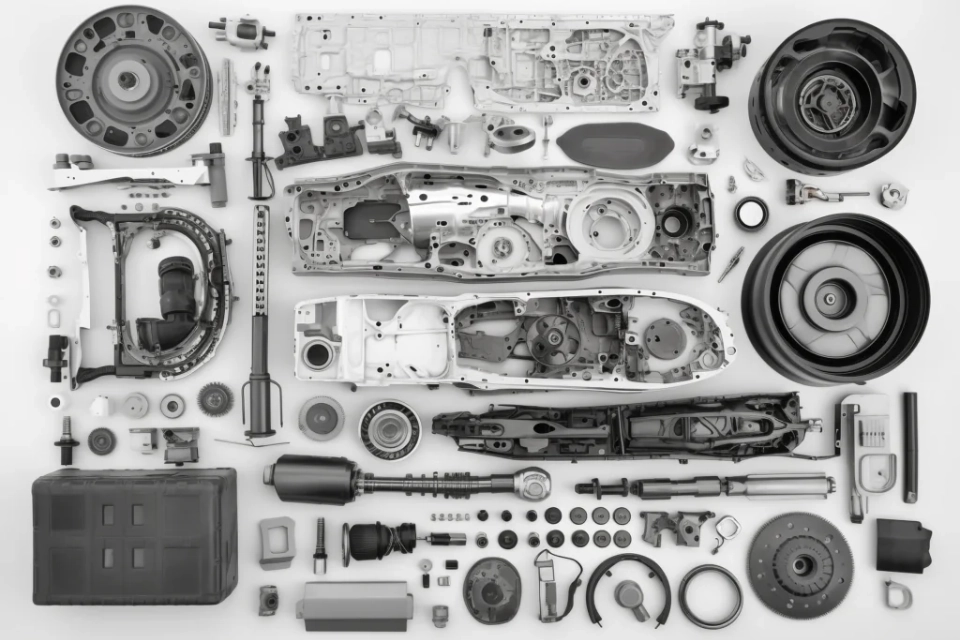
Performance Validation & Functional Testing
Rapid automotive prototyping supports the design and development process while helping reduce overall costs. It enables manufacturers to test and refine designs to ensure final products meet performance, safety, and aesthetic standards.
With advanced prototyping technologies, highly accurate and fully functional automotive prototypes can be produced for real-world testing of engines, interior components, and safety systems. This process ensures reliability before moving into full production.
Design Optimization & Market Competitiveness
The prototyping process allows automotive design teams to better understand consumer appeal and validate product value. It also improves communication between engineering and project teams, enabling faster feedback, clearer design intent, and more efficient iterative development.
By integrating rapid prototyping into automotive development, companies can accelerate innovation, shorten time-to-market, and maintain a competitive edge in today’s fast-evolving automotive industry.
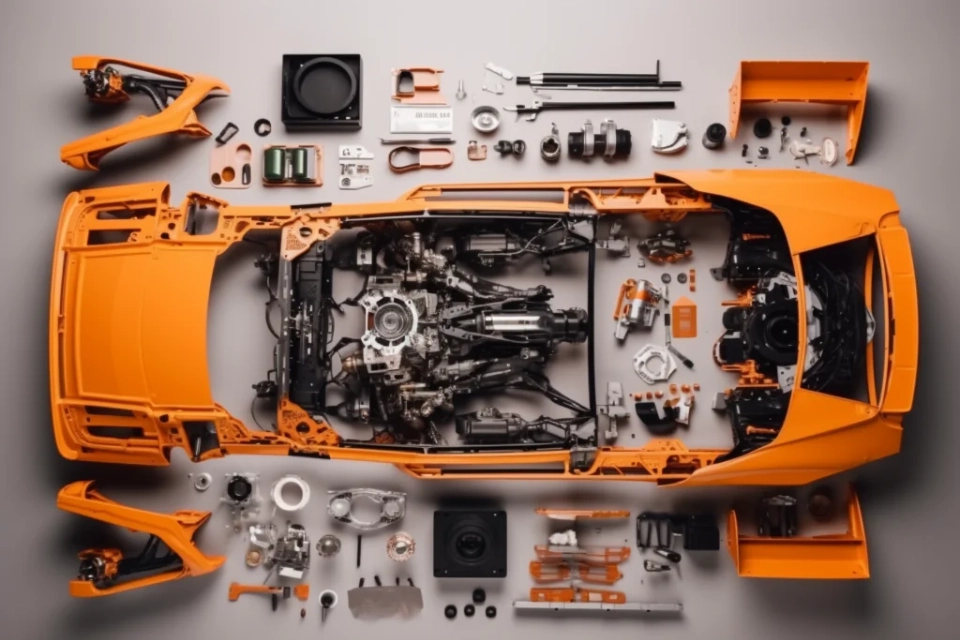
What types of automotive parts can we produce?
Our Manufacturing Capabilities
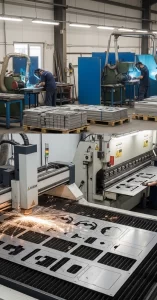
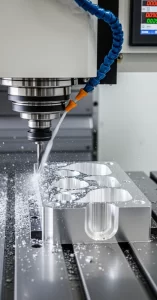
Automotive component manufacturing requires high precision, durability, and consistent performance to meet demanding vehicle industry standards. Advanced manufacturing technologies are used to produce vehicle components for design validation, structural optimization, and functional testing. Automotive rapid prototyping and custom manufacturing services include CNC machining, injection molding, sheet metal fabrication, and 3D printing, enabling the production of complex geometries and high-strength parts. The manufacturing process emphasizes dimensional accuracy, surface quality, and mechanical reliability while supporting fast turnaround to accelerate automotive product development and engineering validation.
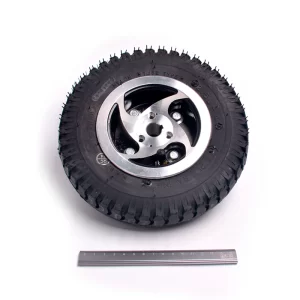
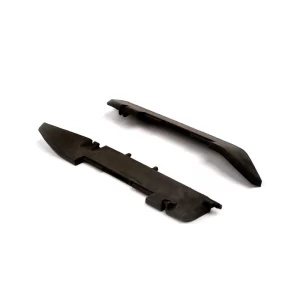
Typical Automotive Components
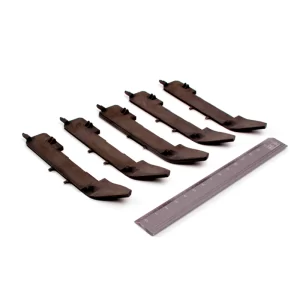
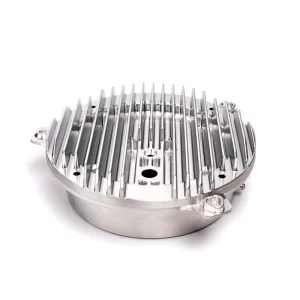
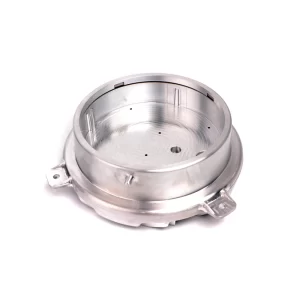
Over the years, we have built extensive experience in automotive manufacturing, enabling us to support diverse project requirements. Below are examples of high-precision automotive prototypes and production components delivered to global customers.

Materials for Processing Automotive Parts
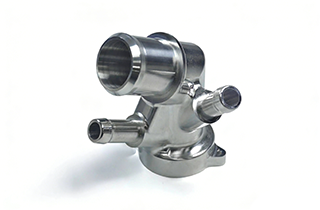
We offer a wide range of production-grade metals and composites that meet industry manufacturing standards, making them ideal solutions for rapid prototyping and component development in the automotive industry. Below is a sample of some common materials; please contact us for more information.
 |  |  | |  |
| Aluminum | Copper | Stainless steel | Titanium | Plastic |
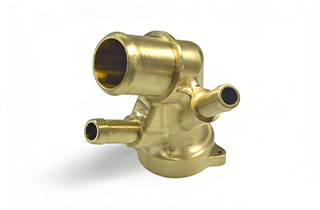
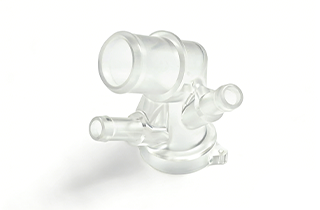
| Aluminum offers an outstanding strength-to-weight ratio, making it ideal for high-load aircraft mounts and enclosures. With good ductility, stiffness, corrosion resistance, and machinability, it is widely used in aerospace structures such as fuselage skins and wing components. | Copper offers excellent thermal and electrical conductivity with strong ductility and plasticity. It resists corrosion, is easy to form and weld, and performs reliably in electrical components, heat exchangers, industrial connectors, and various precision engineering applications. | Stainless steel is a corrosion-resistant alloy containing at least 10% chromium. Widely used in demanding industrial applications, it is ideal for engine and exhaust joints, landing gear, and aircraft structural components, ensuring durability and high performance. | Titanium has many material properties that make it an ideal metal for demanding applications. These properties include excellent resistance to corrosion, chemicals and extreme temperatures. This metal also has an excellent strength-to-weight ratio. | Plastic is a widely used material in CNC machining thanks to its broad material options, cost efficiency, and faster machining cycles compared to metals. We offer precision CNC machining services for all common engineering and industrial-grade plastics. |
Our Surface Finishing
We offer a variety of high-quality surface treatment processes. We have only listed some commonly used options. Contact us for more surface treatment solutions.
 | 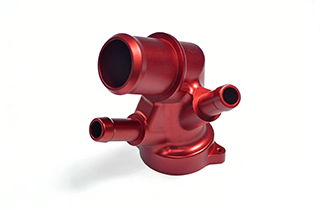 | 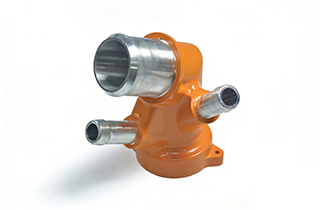 | 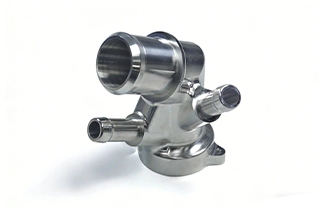 | 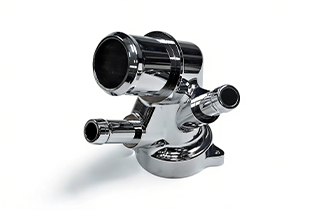 |
| Sandblasting | Anodizing | Electrostatic spraying | Polishing | Plating |
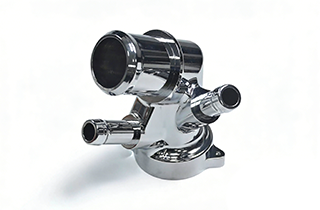
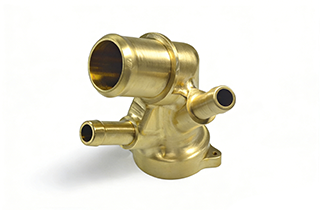
| After sandblasting treatment, the surface of the parts presents a uniform matte texture with a fine, consistent finish. It is mainly used for visual and aesthetic applications, improving appearance and surface uniformity, and can also serve as a base for subsequent coating, painting, or anodizing treatments. | Anodizing improves corrosion resistance, increases surface hardness and wear resistance, and protects metal components long term. It is widely used in mechanical parts, precision instruments, aerospace, and automotive applications where durability, strength, and reliable surface performance are essential. | Electrostatic spraying is a coating process in which a free-flowing dry powder is applied to a surface. Unlike traditional liquid coatings that depend on solvent evaporation, powder coatings are electrostatically sprayed and then cured under heat or UV light to form a durable, uniform finish. | The polishing range spans from Ra 0.8 to Ra 0.1, depending on surface requirements. This finishing process uses abrasive materials to refine and smooth part surfaces, adjusting gloss levels as needed, resulting in either a high-luster, mirror-like appearance or a softer, uniform matte finish. | Electroplating is a surface treatment process that uses an electric current to reduce and deposit metal cations onto a substrate. This coating enhances surface protection, improves appearance, increases wear resistance, and effectively prevents corrosion caused by rust and other environmental factors. |
Why Choose Custom Automotive Prototyping Services at RapidCalib ?
RapidCalib has specialized in automotive prototyping services for over 25 years, using advanced manufacturing technology to deliver high-precision and structurally reliable components. As a professional rapid prototyping provider for the automotive industry, we operate under the latest ISO 9001 quality standards to ensure accuracy and performance consistency.
We support automotive prototyping projects with fast quotation services—upload your PDF or STEP file and receive a response within 1 hour. Our manufacturing processes can achieve tight tolerances of up to ±0.001 inch, meeting the high-precision requirements of automotive rapid prototyping applications.
Get a Quote
We continuously review the unique requirements of automotive manufacturers to deliver solutions tailored to specific applications. From prototype design to mass production, all manufactured parts meet strict industry performance and safety standards.
- Fast response within 12–24 hours
- Professional engineering support
- Design for manufacturability (DFM) feedback
- Competitive pricing for prototypes and production
- Strict quality control and inspection
- Global shipping and reliable delivery
